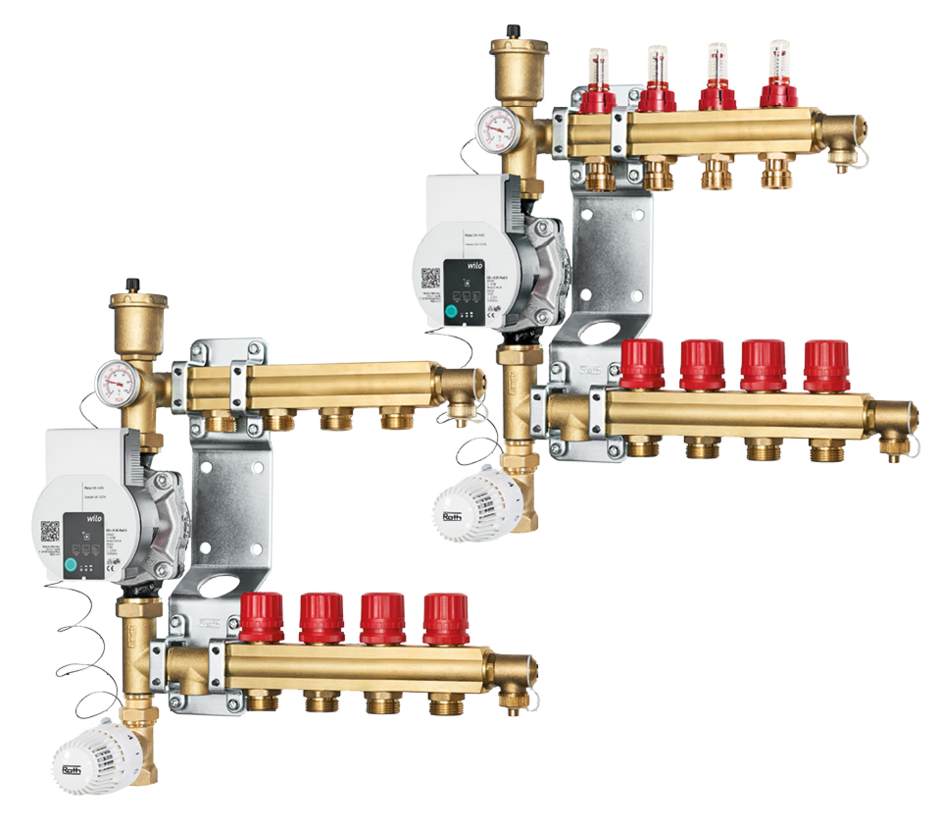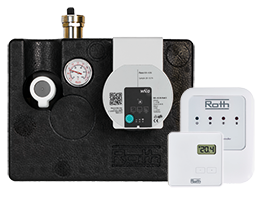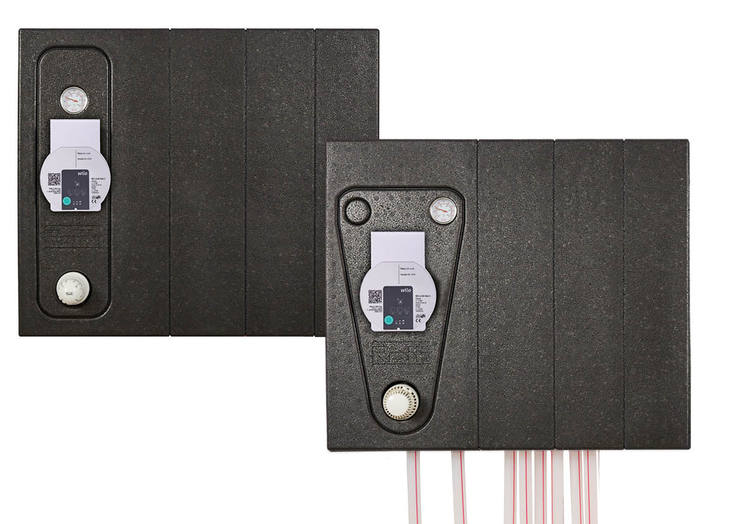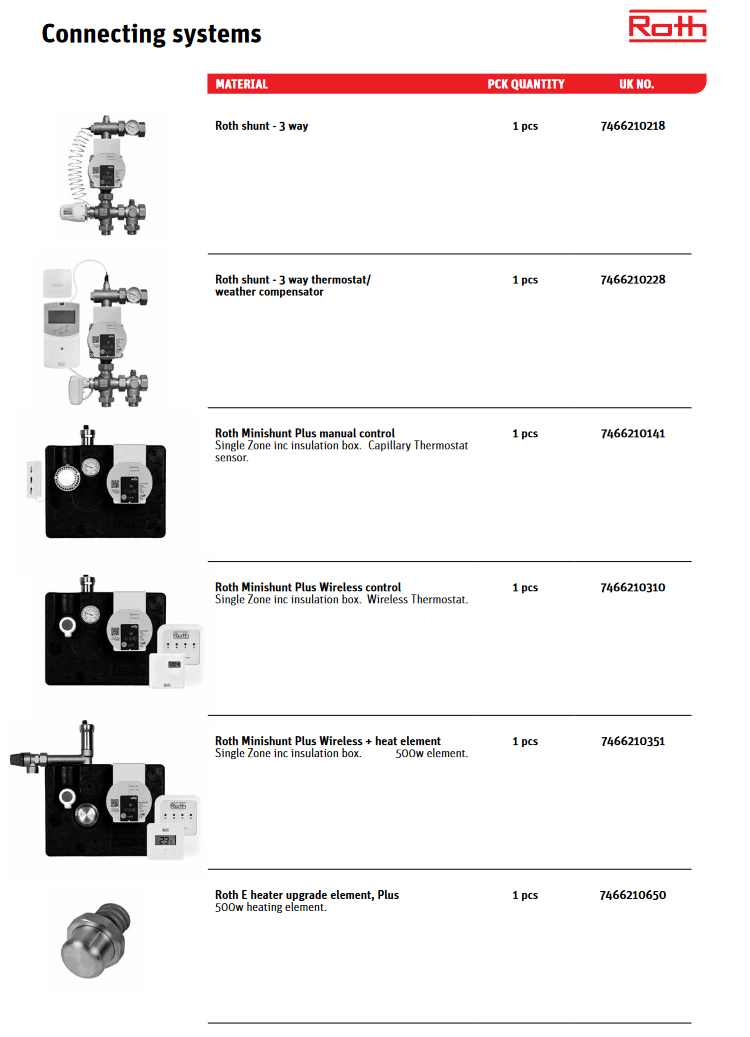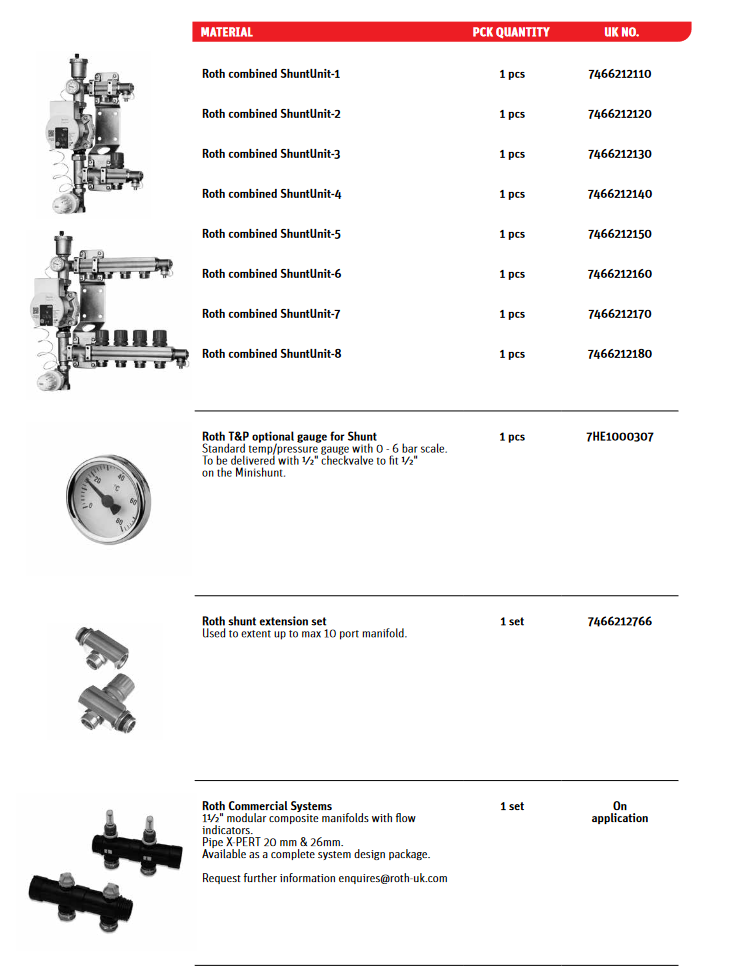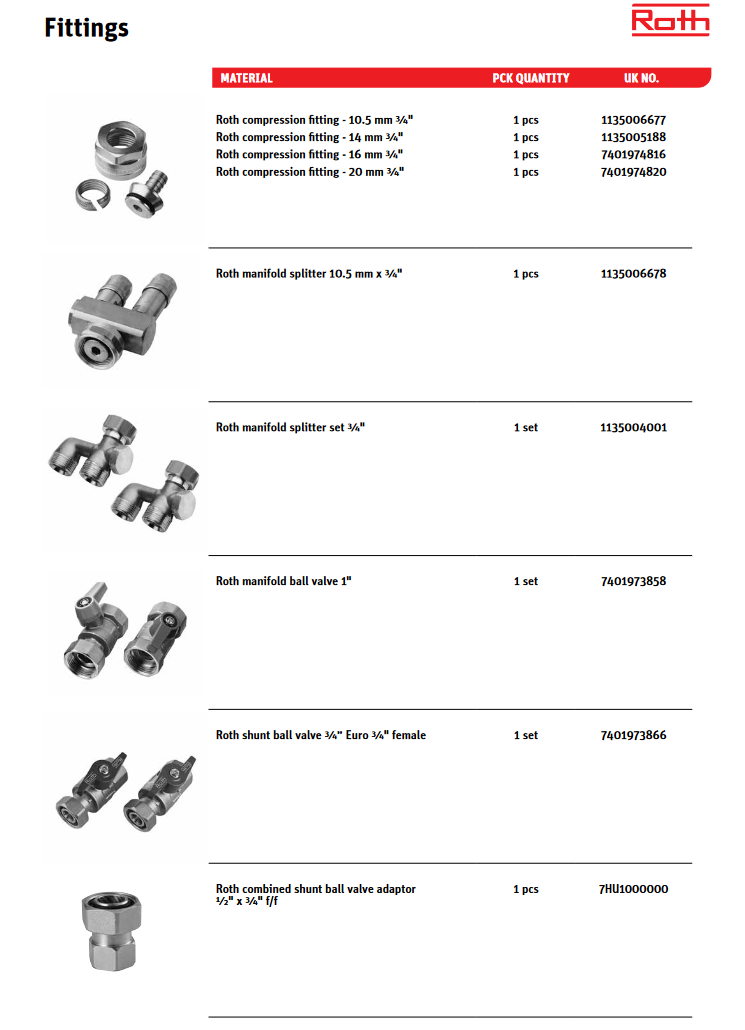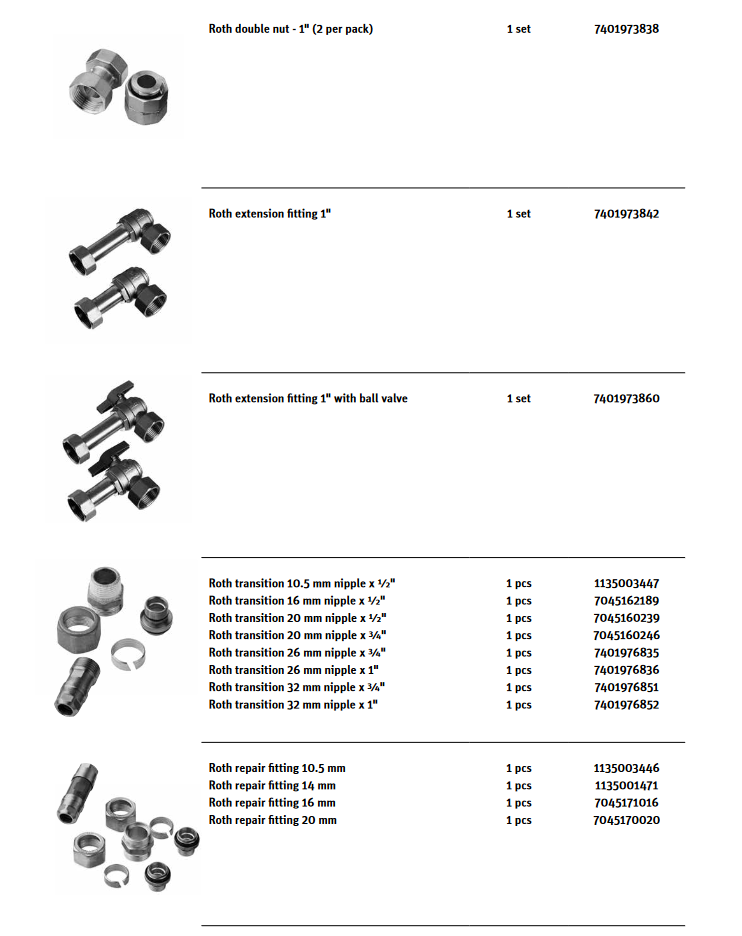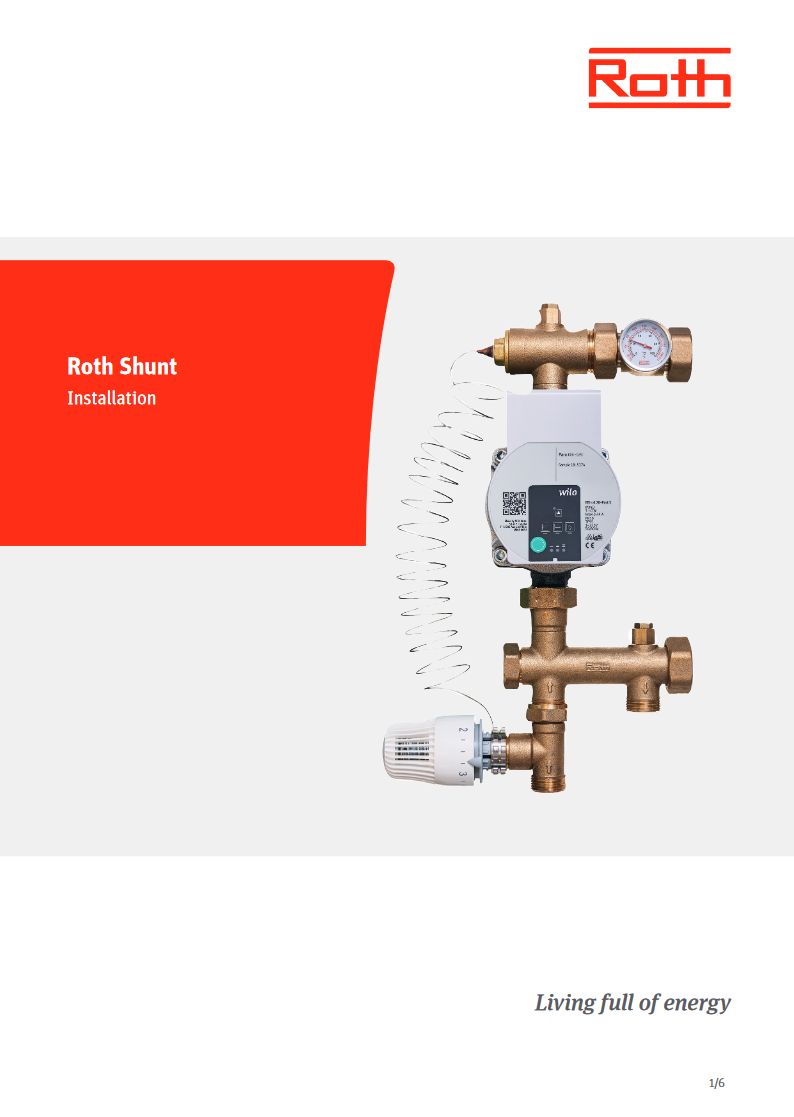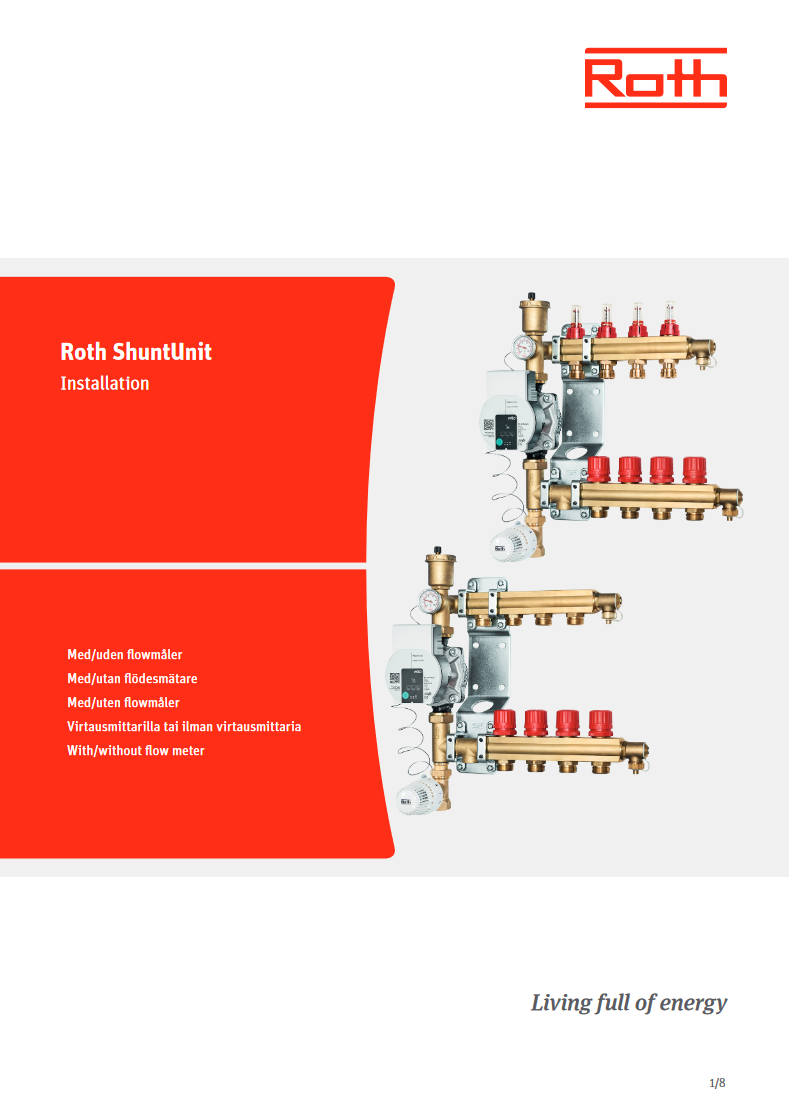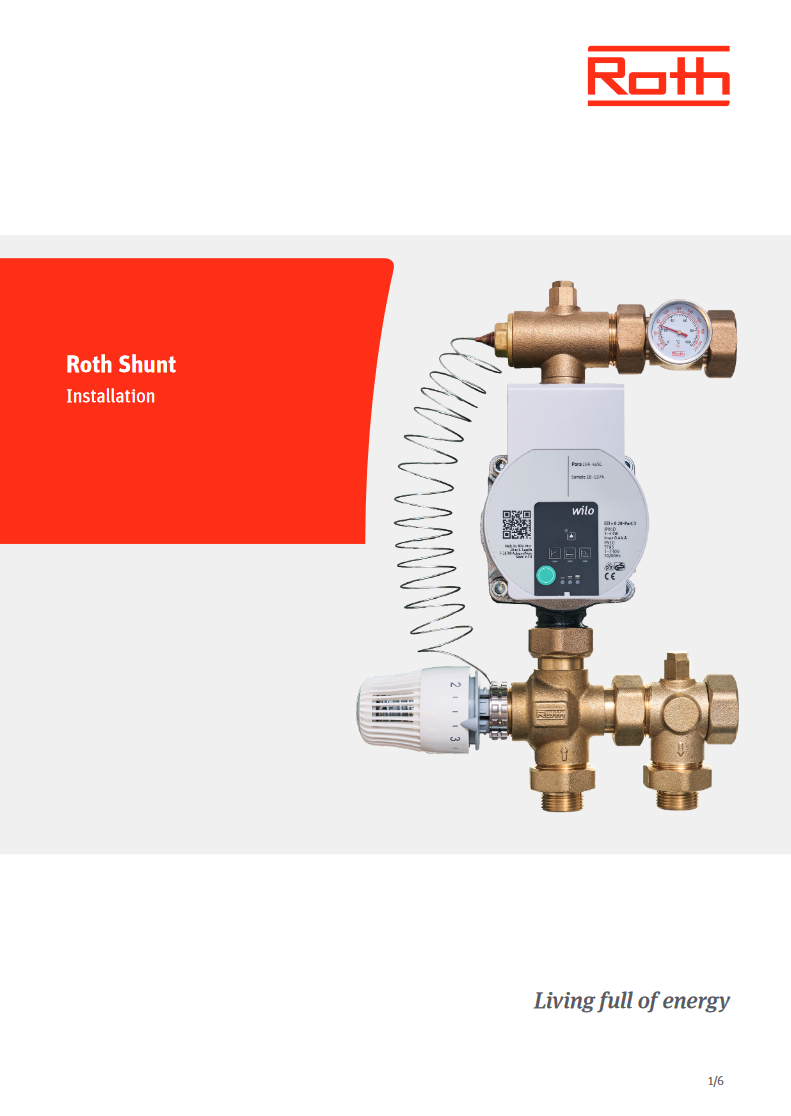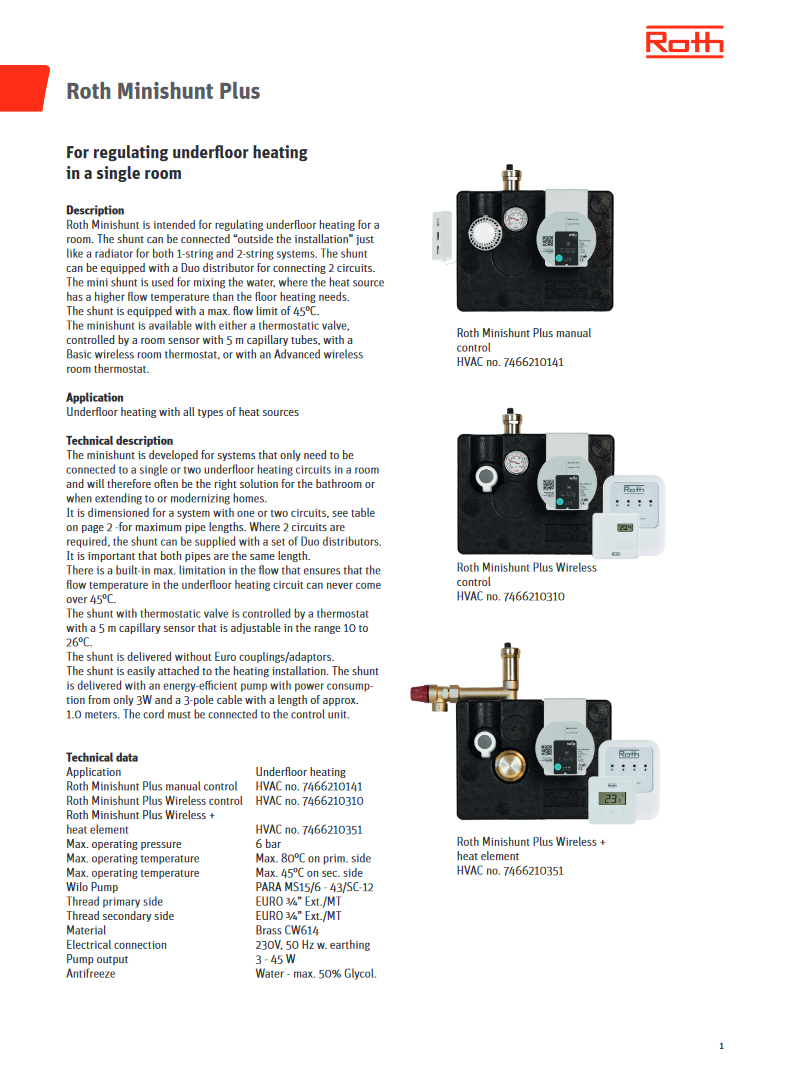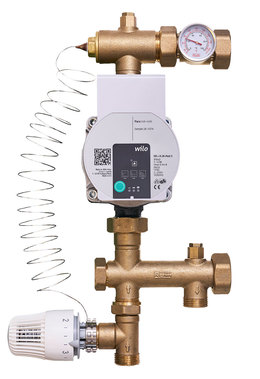
Roth shunt with thermostatic valve
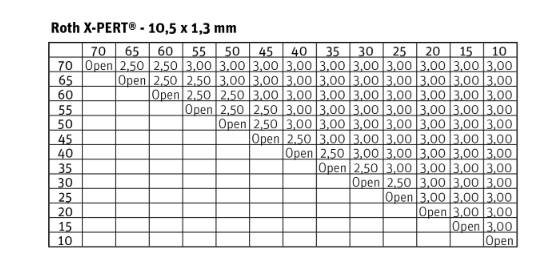
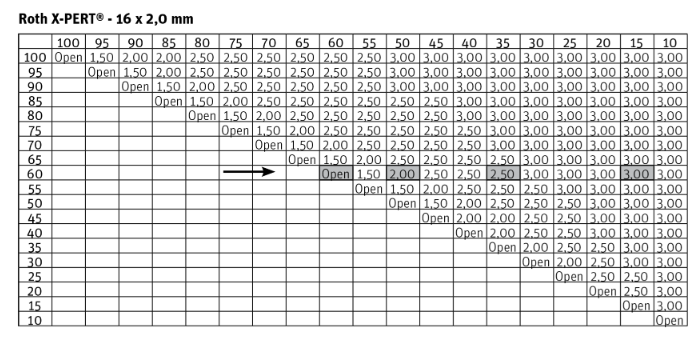
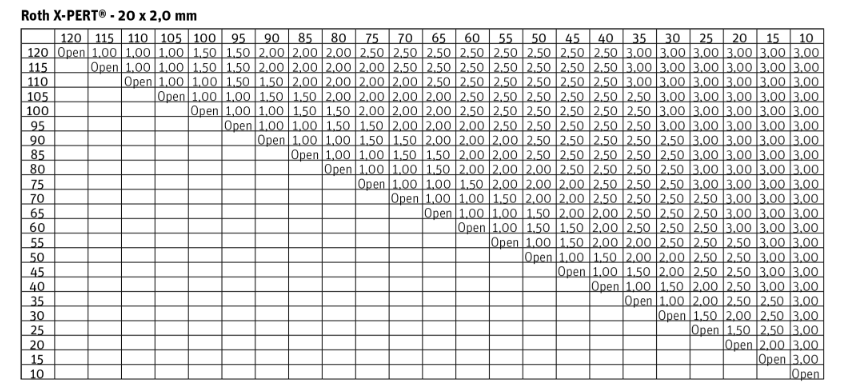
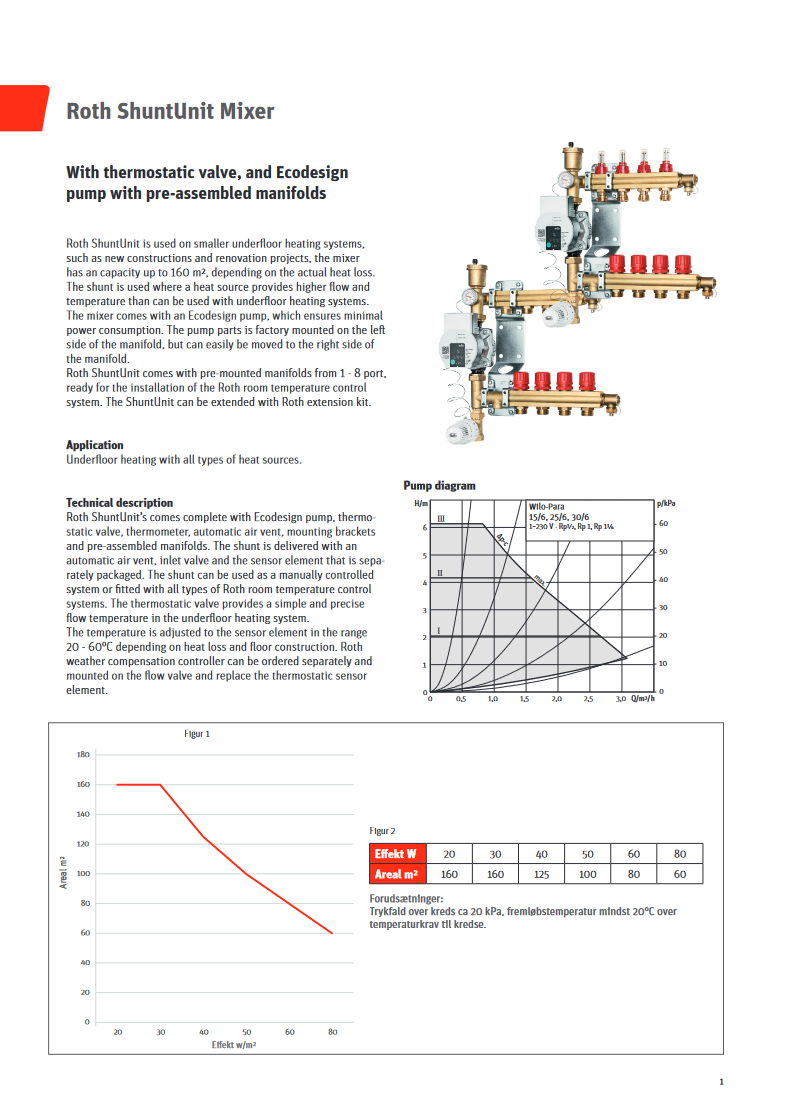
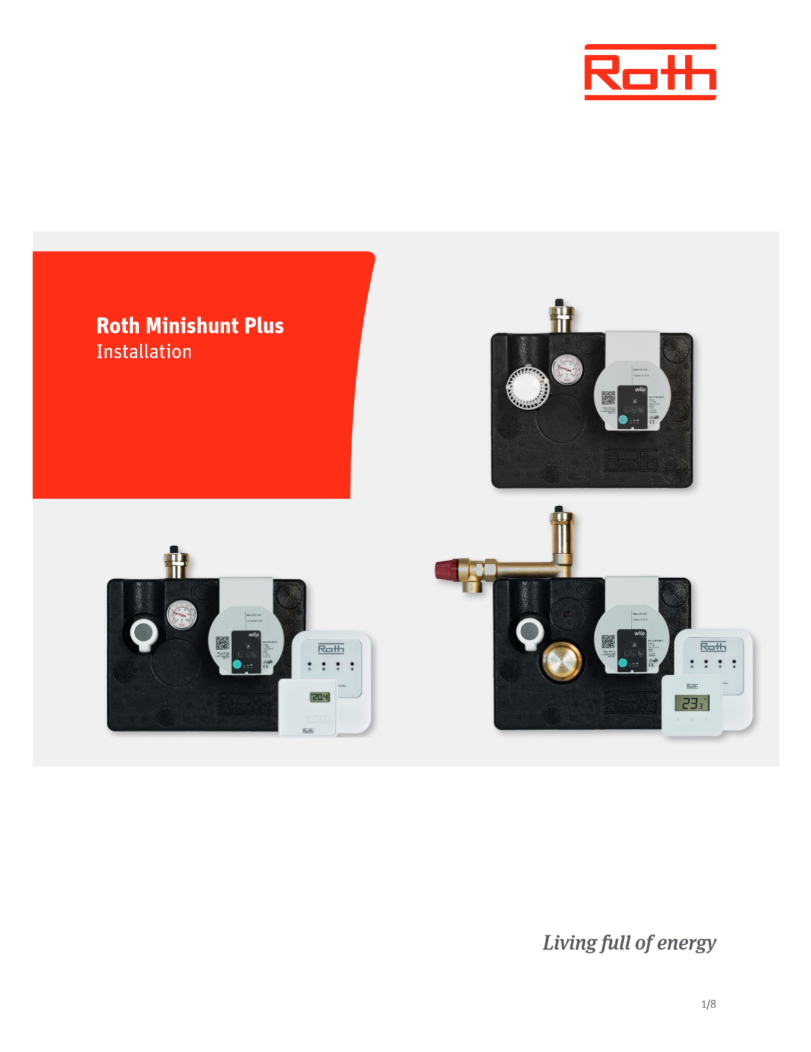
Roth shunt with thermostatic valve comes with Wilo Para pump 15-130/6. The pump and shunt are designed for systems of up to 240 m², however, depending on the current heat loss and choice of pipe dimensions. Roth shunt with thermostatic valve
is equipped with thermostatic valve that allows setting the flow temperature in the range of 25 - 60 °C.
The thermostat can be locked. The Roth underfloor heating shunt is left-hung, but can easily be flipped and converted to right-hung.
Roth shunt with thermostatic valve comes complete with thermometer, gaskets, thermostat, pre-setting key and pump.
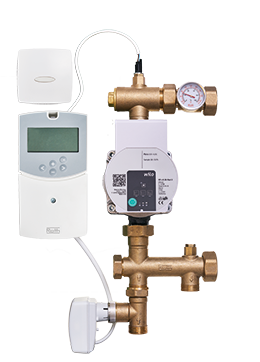
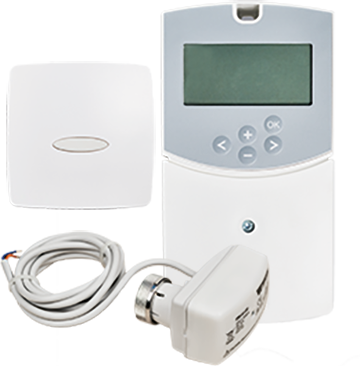
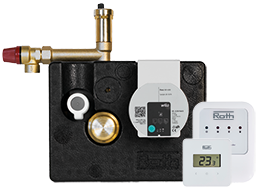
Roth shunt with weather compensation
The Roth shunt with weather compensation comes with a Wilo Para pump 15-130/6 that complies with the EUP 2015 requirement. The pump and shunt are designed for systems of up to 240 m², however, depending on the current heat loss and choice of pipe dimensions.
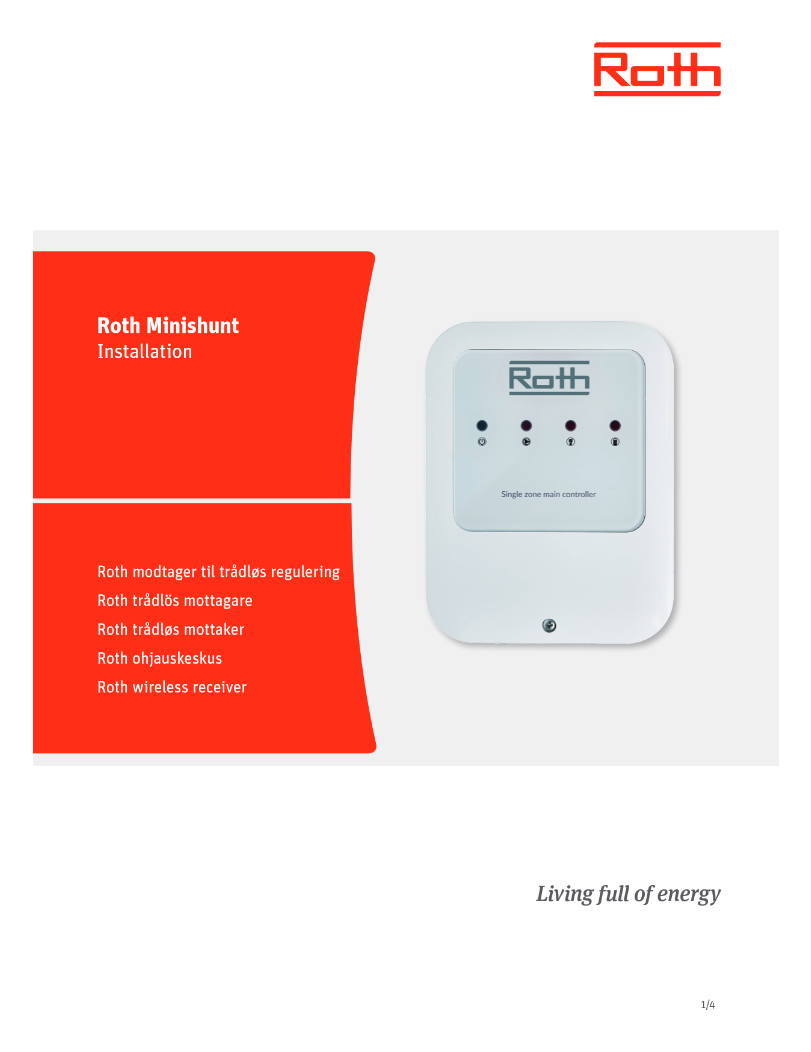
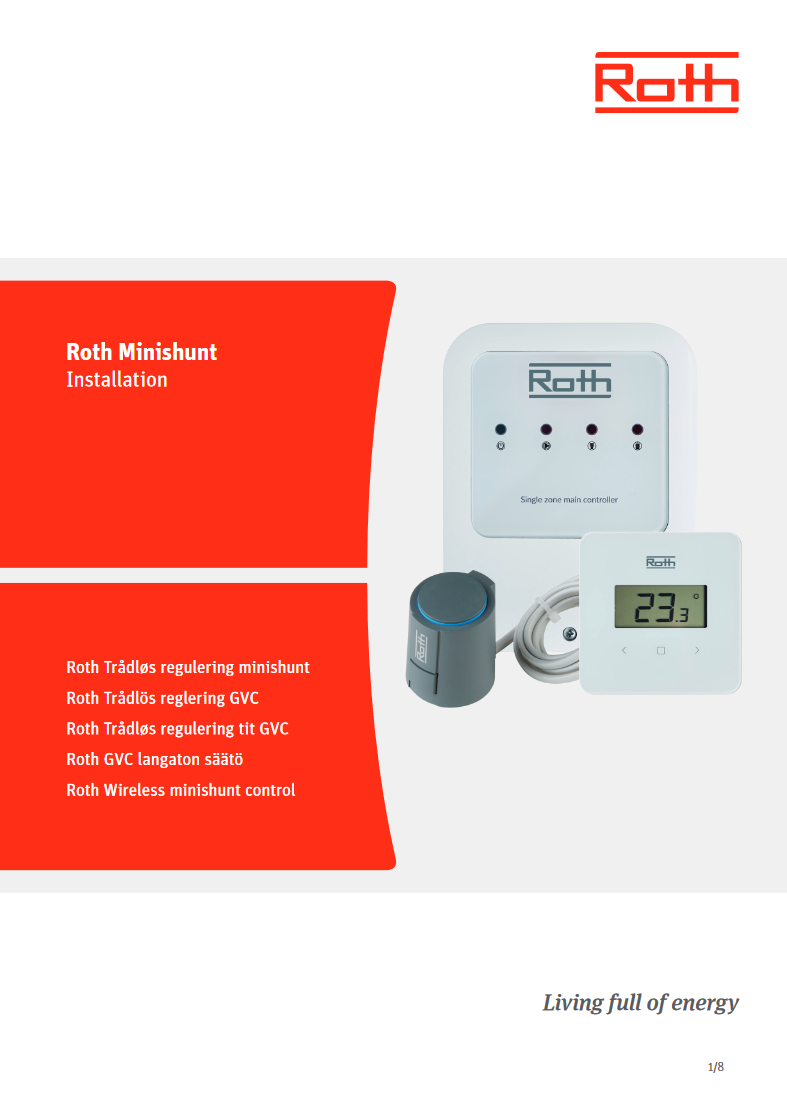
The Roth shunt with weather compensation is equipped with a complete weather compensation system consisting of outdoor sensor, flow sensor, engine valve and the steering itself. In the control system, you can choose optionally from several heating curves, and you can, among other things, choose maximum flow temperature, etc.
The Roth shunt with weather compensation is left-hung, but can be easily flipped and converted to right-hung.
Roth shunt with weather compensation comes complete with thermometer, gaskets, weather compensation system, pre-setting key and pump.
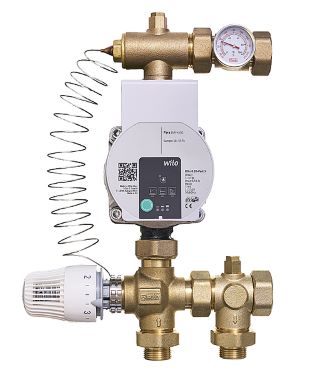
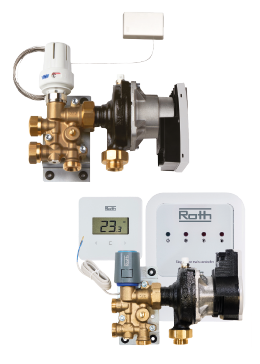
Roth shunt 3-way with thermostatic valve
The shunt comes with a Wilo Para pump 15-130/6. The pump and shunt are designed for systems of up to 240 m², however, depending on the current heat loss and choice of pipe dimensions.
The shunt is designed to be able to collect the water from the heat source itself, so that in some types of systems the primary pump can be dispensed with completely or alternatively only has to provide a very small primary pressure. It is possible to regulate the flow temperature in the range of 25-60°C.
The thermostat can be locked. The shunt is left-hung, but can easily be flipped and converted to right-hung. The shunt comes complete with thermometer, gaskets, thermostat and pump.
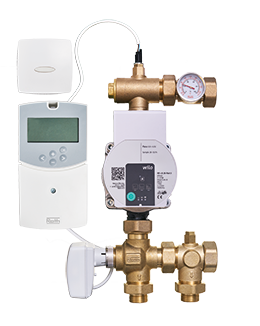
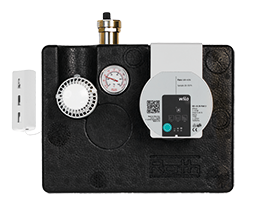
Roth shunt 3-way with weather compensation
The heating standard DS 469 requires automatic control of the flow temperature according to the heat demand. In practice, this means that central heating systems without integrated weather compensation in the heat source must be mounted with weather compensation. This also applies to underfloor heating systems.
The Roth shunt 3-way with weather compensation is simple to operate and provides a quick overview of temperatures and operating status via the display. Roth shunt 3-way with weather compensation comes with integrated valve for balancing the primary flow and Wilo Para pump 15-130/6. The Roth shunt 3-way with weather compensation has a capacity of approx. 240 m² and of course fits directly on Roth floor heating distributors.
Complete with outdoor sensor, flow sensor and engine valve.